
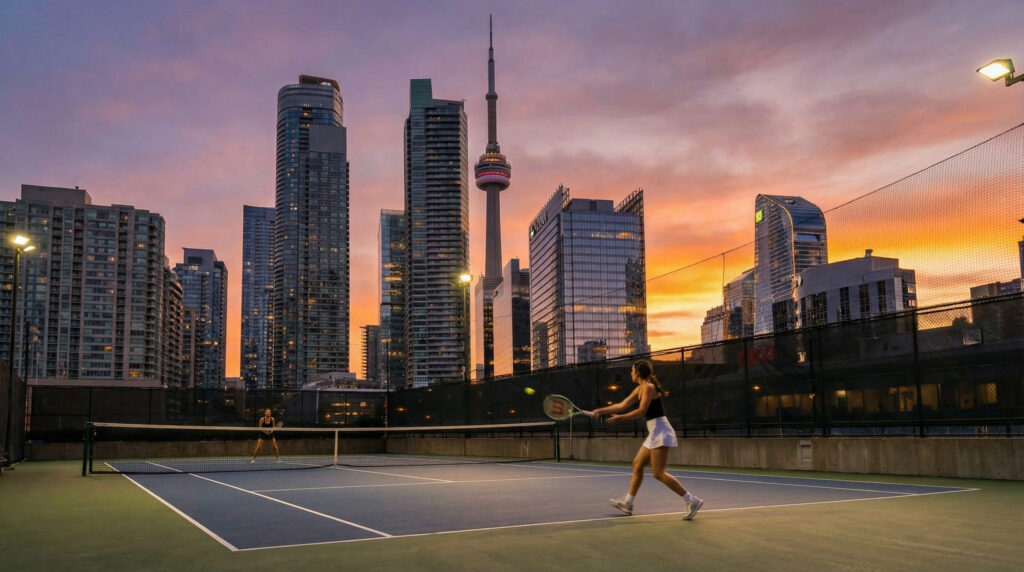
OUTDOOR & SEASONAL SPORTS IN TORONTO (HOW IT REALLY WORKS)
This isn’t a guide about discipline or routines that survive all four seasons unchanged. Toronto doesn’t move that way, and neither do the people who live here.
Being active in this city is mostly reactive. It responds to weather, light, mood, and how much patience you have that day. Some weeks it looks intentional and planned. Other weeks it’s just choosing to walk longer, bike farther, or stay outside because it feels good to be there.
Toronto changes how it moves every few months, and locals don’t resist that shift. They follow it.
If you’re looking for outdoor sports in Toronto or seasonal activities that actually fit real life, the key is understanding that movement here isn’t rigid. It expands and contracts. It gets social, then quiet. It resets often.
By CELESTE FERNER JANUARY 17, 2025
A CITY THAT DOESN’T ASK FOR COMMITMENT
Toronto never asks you to define yourself as “sporty.”
You don’t need a membership or a plan. You don’t need to decide what kind of athlete you are. Most of the time, you just step outside and respond to what the city is offering that day.
In warmer months, movement feels almost built in. Bike lanes stretch across neighbourhoods, parks fill naturally, and waterfront paths gently pull you forward. Activity happens without labels or pressure.
When the temperature drops, everything becomes more contained. Fewer people linger. Sessions are shorter. Movement becomes practical and intentional instead of performative.
For locals, outdoor activity isn’t about optimization. It’s about staying connected to the city, breaking up the week, and reminding yourself that winter hasn’t fully taken over.
Visitors often notice this shift too. Toronto doesn’t look like an outdoor sports city at first, but once you see how many people are running, skating, cycling, or just walking with purpose, it becomes obvious that movement is part of daily life here.
The city adjusts to your energy, not the other way around.

HOW THE SEASONS SHAPE HOW PEOPLE MOVE
Toronto doesn’t have a single sports culture. It has phases.
Spring is gentle and experimental. People start with walks, light runs, and easy bike rides through places like High Park or quiet residential loops. It feels more like re-entry than training.
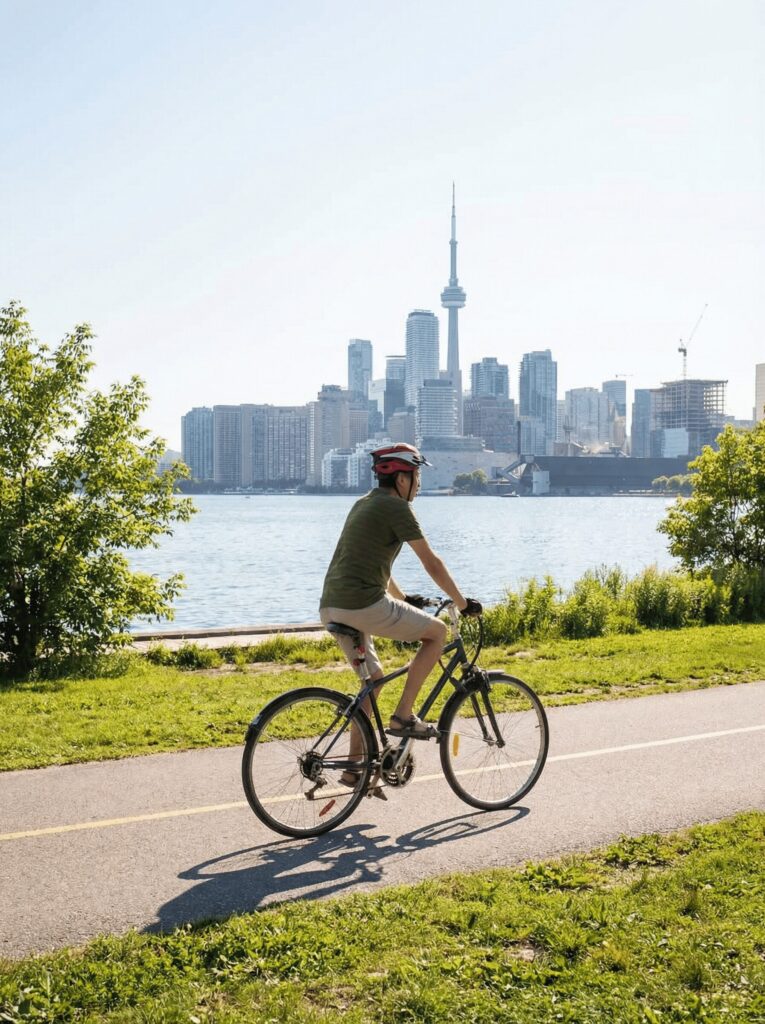
Summer opens everything up. Cycling across the Toronto Islands feels closer to wandering than exercise. Along the Toronto Waterfront, people move, stop, sit, talk, and then keep going. Activity becomes social by default.
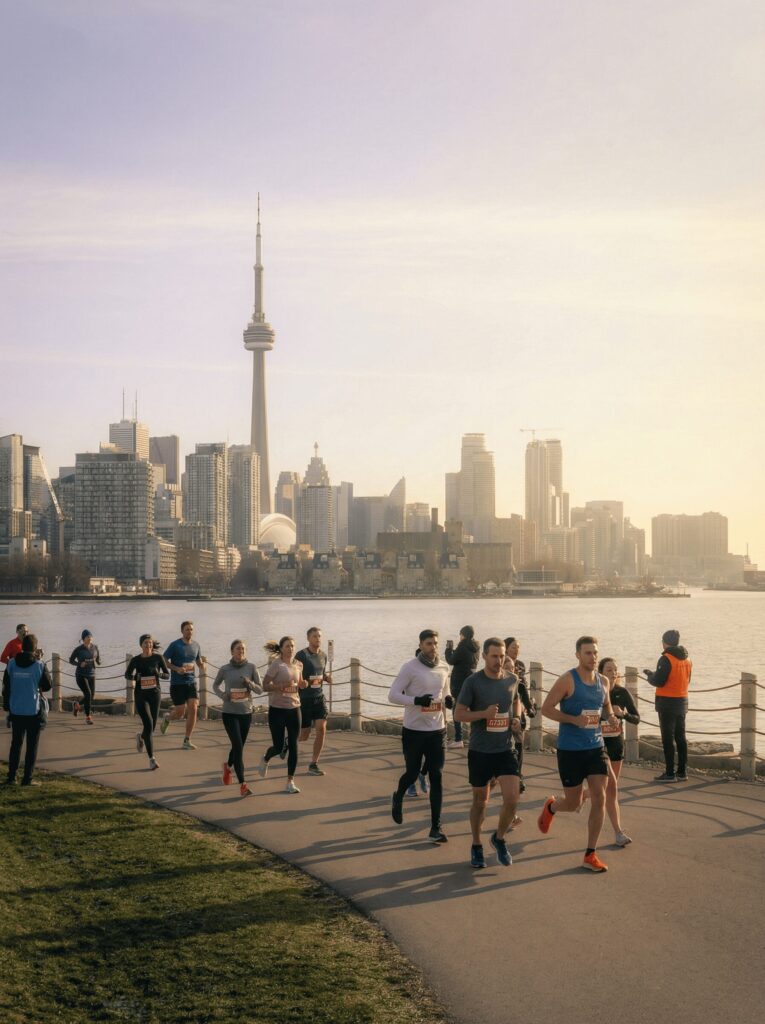
Fall brings focus. Cooler air pulls runners into longer routes, and trails like the Don Valley Trails start to feel meditative. This is when habits quietly solidify because conditions are ideal, not because anyone forced them.
Winter simplifies everything. Skating at Nathan Phillips Square becomes part tradition, part practicality. Some people keep running outdoors. Others move inside. Both choices are normal here.
Nothing carries over unchanged. Every season resets expectations.
WHEN MOVEMENT BLENDS INTO REAL LIFE
The reason outdoor sports work in Toronto is because they don’t announce themselves.
A bike ride is often just transportation.
A walk stretches longer because the street feels alive.
A skate replaces an hour of scrolling without needing motivation.
Most people don’t carve out big blocks of time. Movement slips into the day between errands, before dinner, or during a lunch break when the weather cooperates.
Toronto supports effort that fits into real schedules.
TIMING MATTERS MORE THAN INTENSITY
Being active here is less about what you do and more about when you do it.
Summer mornings feel open and calm. Late afternoons turn social and energetic. Evenings stretch into long walks and unplanned detours.
In winter, daylight sets the rules. Midday movement feels best. Short sessions count. Nights are for recovery.
Weekdays feel personal. Weekends feel collective.
There’s almost always a moment when the city feels usable — you just learn how to notice it.
WHAT YOU ACTUALLY NEED (AND WHAT YOU DON’T)
One of the reasons outdoor sports work in Toronto is because the barrier to entry stays low.
Most people aren’t over-equipped. They don’t wait for the perfect outfit or the ideal setup. They work with what they have and adjust as they go. Comfortable shoes matter. Layers matter. Everything else is optional.
Toronto movement culture is practical, not aspirational. You’ll see people cycling in regular jackets, running without tracking apps, skating without looking particularly athletic. The city rewards showing up more than showing off.
Weather here teaches flexibility fast. If it’s colder than expected, you shorten the loop. If it warms up, you stay out longer. If conditions aren’t great, you pivot instead of quitting entirely.
That mindset is what keeps people moving year-round. Not motivation, not gear, not goals — just a willingness to adapt and not make things harder than they need to be.
THE AFTERTHOUGHT
Over time, outdoor sports in Toronto stop feeling like a category.
They become a way of reading the city.
You learn when to push and when to ease off. You follow seasons instead of fighting them. You move because it makes sense, not because it’s scheduled.
Toronto doesn’t ask for intensity.
It responds to awareness.
And once you start moving with the city instead of against it, staying active here feels less like effort — and more like instinct.