
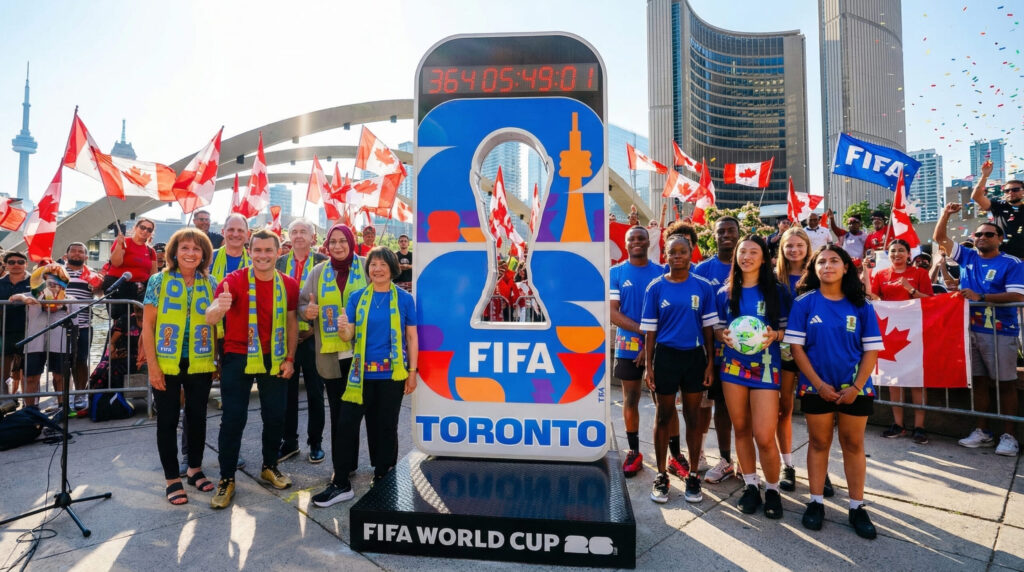
TORONTO WORLD CUP 2026: A LOCAL’S GUIDE TO THE GAMES, DATES & CITY ENERGY
The summer of 2026 is the moment Toronto stops pretending it’s not a global city and just lets it happen. Jerseys on streetcars. Languages overlapping on patios. Random Tuesday afternoons that suddenly feel historic.
This is your grounded, no-hype guide to the FIFA World Cup in Toronto — the confirmed games, the real dates, and what it will actually feel like moving through the city while the world is here.
By VITALIY PAVLYSH JANUARY 04, 2026
TORONTO AS A WORLD CUP HOST CITY
The 2026 World Cup runs from June 11 to July 19, 2026, hosted across Canada, the United States, and Mexico. Toronto is one of only two Canadian host cities, alongside Vancouver — and it’s not a symbolic role.
Toronto hosts six official matches, spread across the most social, high-energy part of the tournament: five group-stage games and one knockout match. That timing matters. Group stages are where the city feels the most alive — when hope is still intact, fans are relaxed, and everyone’s down to watch any match, not just their own team.
This isn’t a one-day event. It’s weeks of build-up, release, and city-wide momentum.
WHERE THE GAMES WILL BE PLAYED
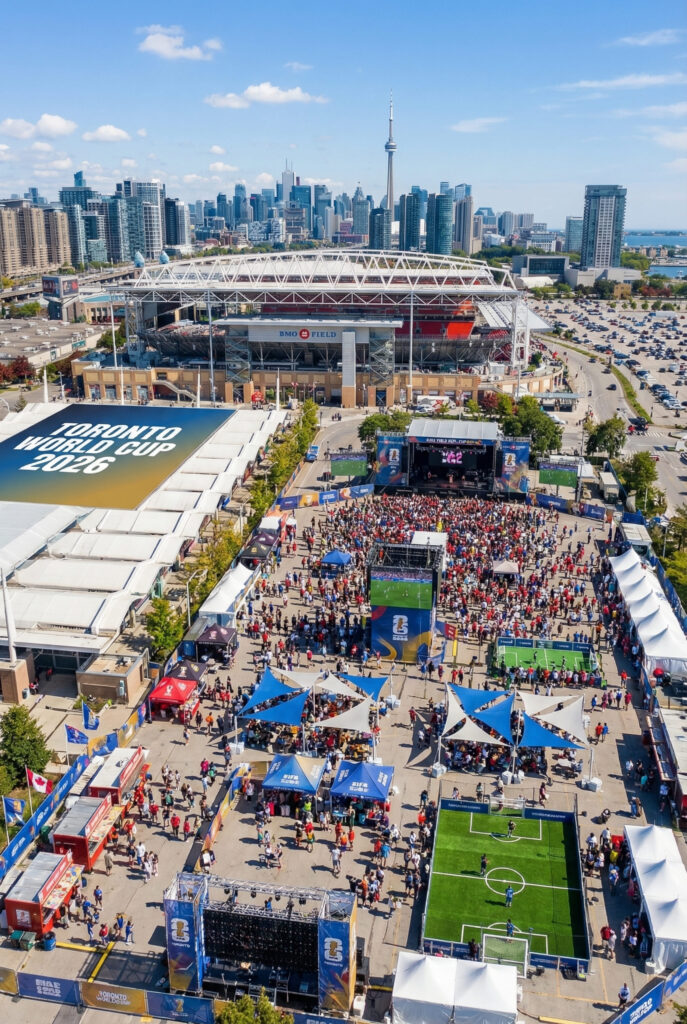
All Toronto matches will be played at BMO Field, temporarily renamed Toronto Stadium for the tournament.
Sitting at Exhibition Place by the lake, the stadium is being expanded to roughly 45,700 seats for 2026, with major upgrades to infrastructure, fan areas, and broadcast facilities. It’s open-air, which means the World Cup doesn’t feel sealed off — it blends into the waterfront, Liberty Village, and downtown in real time.
On match days, the area won’t feel like a destination you arrive at. It’ll feel like something you walk into without trying.
TORONTO’S CONFIRMED WORLD CUP MATCH DATES
Toronto’s World Cup run begins on Friday, June 12, 2026 at 3:00 PM ET, with a match that’s already historic: Canada vs the UEFA Playoff A winner. This is the first men’s World Cup match ever played on Canadian soil, and it happens in Toronto.
The group stage continues on June 17 at 7:00 PM, when Ghana faces Panama, followed by June 20 at 4:00 PM, featuring Germany vs Côte d’Ivoire — one of the highest-profile matchups the city will host.
On June 23 at 7:00 PM, Croatia plays Panama, and Toronto’s group-stage run wraps on June 26 at 3:00 PM, with Senegal taking on the winner of FIFA Playoff 2.
Toronto stays in the tournament with a Round of 32 knockout match on July 2 at 7:00 PM, listed as Group K runner-up vs Group L runner-up. That’s the shift from celebration to pressure — and the city gets a front-row seat.
WHAT THE CITY WILL FEEL LIKE DURING MATCH WEEKS
Toronto summers already move slower and louder at the same time. The World Cup exaggerates that.
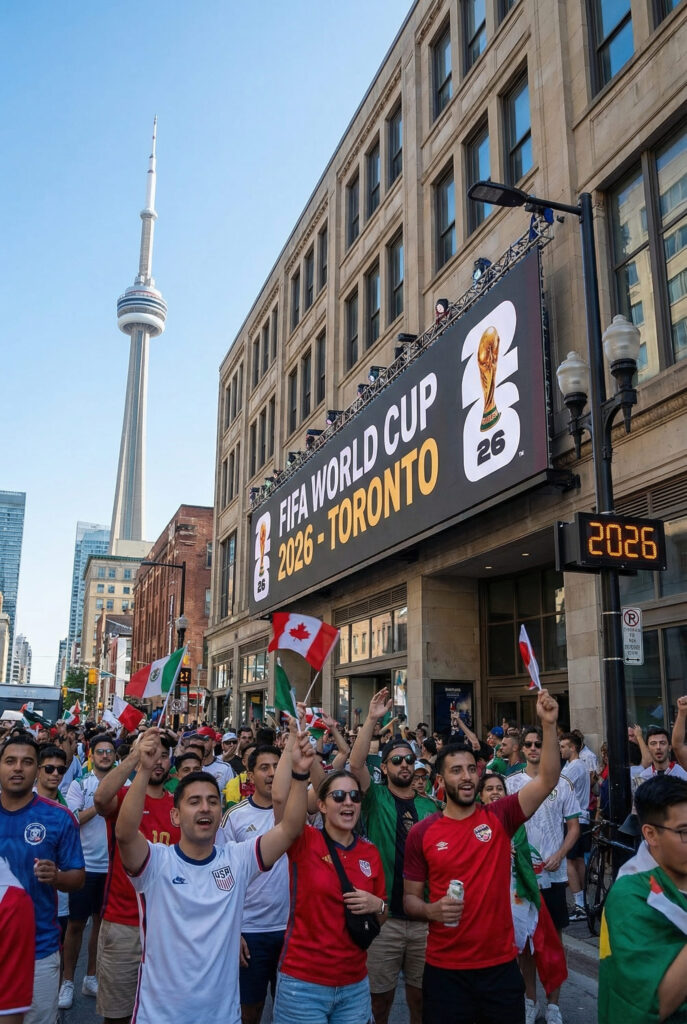
Transit fills earlier. Cafés keep screens on all day. People talk to strangers more easily. You’ll see flags you didn’t know you recognized until suddenly you do. Mid-week evenings feel like weekends. Random parks turn into viewing zones with zero coordination.
Neighbourhoods near the stadium — Liberty Village, Parkdale, the waterfront — will feel it first, but the energy spreads. Downtown, Queen West, King West, Ossington. Even places that don’t usually care about sports will quietly adapt because the city mood demands it.
WATCHING THE WORLD CUP IN TORONTO (WITHOUT TICKETS)
Yes, tickets will be hard to get. Yes, prices will spike. But Toronto is a better World Cup city outside the stadium than inside it.
The city and tournament organizers are planning official fan zones and public viewing areas, especially near the waterfront and downtown. But the real experience happens elsewhere — bars turning into national headquarters for a night, cafés shifting hours, patios staying packed long after kickoff.
You don’t need a seat to be part of it. You just need to be out there.
HOW TO EXPERIENCE TORONTO’S WORLD CUP THE RIGHT WAY
The best way to do the World Cup in Toronto is loosely. Save the dates. Know which games matter to you. Pick a few neighbourhoods you like being in and let the rest happen naturally.
Because the real memory won’t be a specific goal or final score. It’ll be the way the city felt — louder, warmer, more open — like Toronto briefly remembered it’s allowed to take up space on the world stage.
Summer 2026 won’t just be another good summer.
It’ll be the one people casually bring up years later and say,
“Remember when the World Cup was here?”