
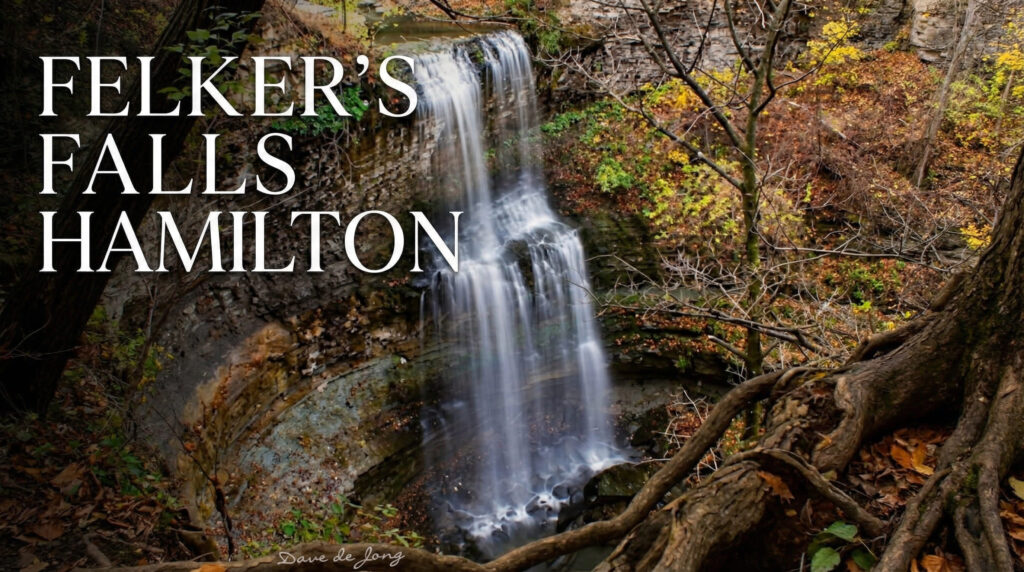
Felker’s Falls Hamilton: A Quiet Waterfall Day Trip From Toronto
Toronto has a habit of sending people to the same nature spots over and over again — Niagara Falls, Elora Gorge, maybe Dundas Peak. Meanwhile, Hamilton quietly sits on the edge of the Niagara Escarpment, with more than a hundred waterfalls scattered through the city and surrounding conservation areas.
One of the easiest to visit is Felker’s Falls Conservation Area in Stoney Creek, about an hour from Toronto. It’s not the biggest waterfall in Hamilton, and that’s exactly why it still feels relatively calm compared to the busier stops.
The area combines a short walk to a 22-metre escarpment waterfall, wooded trails, and the option to connect into longer hikes toward Devil’s Punchbowl. For Toronto locals looking for a quick nature reset without committing to a full hiking trip, Felker’s Falls is one of those places that quietly delivers.
By VITALIY PAVLYSH FEBRUARY 26, 2026
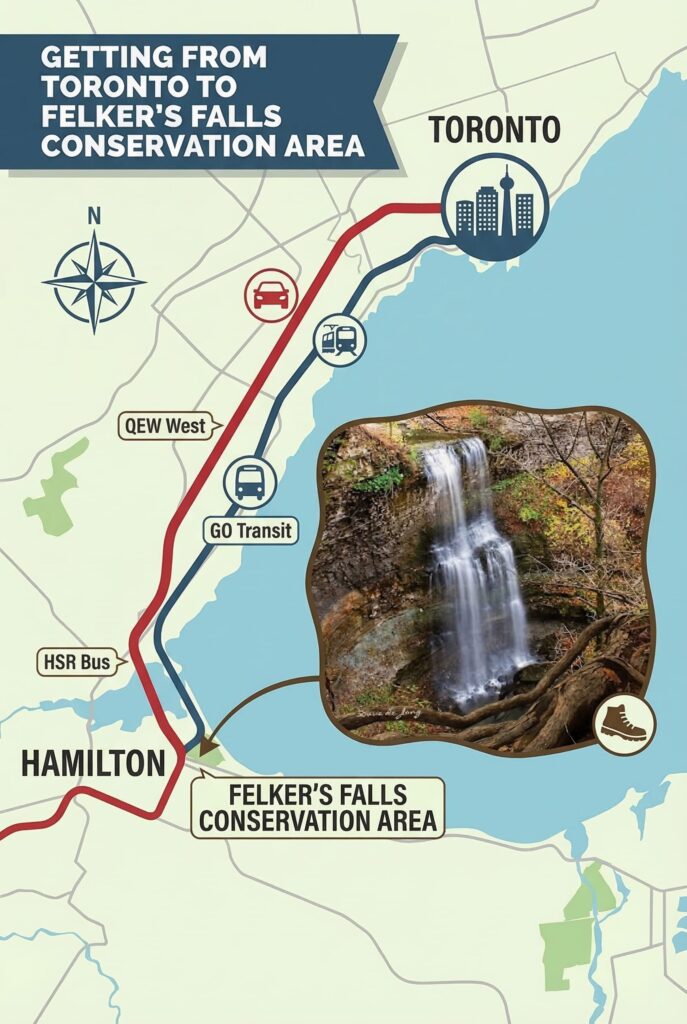
Getting from Toronto to Felker’s Falls Conservation Area
From downtown Toronto, the drive to Felker’s Falls usually takes 60–75 minutes, depending on traffic on the QEW or the 403.
The main access point sits near Ackland Street in Stoney Creek, where visitors typically park and walk toward the conservation area trail entrance. One thing that surprises first-time visitors is that the waterfall sits very close to a residential neighbourhood. It doesn’t feel remote when you arrive.
But once you step onto the trail and reach the escarpment edge, the environment changes quickly. Trees close in, the terrain drops into a gorge, and the sound of the creek becomes louder as you approach the waterfall.
Locals who regularly explore Hamilton’s waterfalls usually recommend arriving earlier in the day, especially on weekends when people tend to visit several nearby falls in one trip.
The main waterfall: what Felker’s Falls actually looks like
Felker’s Falls is classified as a ribbon waterfall, meaning the water flows in a narrow vertical stream rather than spreading across a wide rock face.
At about 22 metres tall, the waterfall drops from the Niagara Escarpment into a rocky valley below. The limestone layers in the cliff are part of the escarpment’s geological formation, which stretches hundreds of kilometres across Ontario.
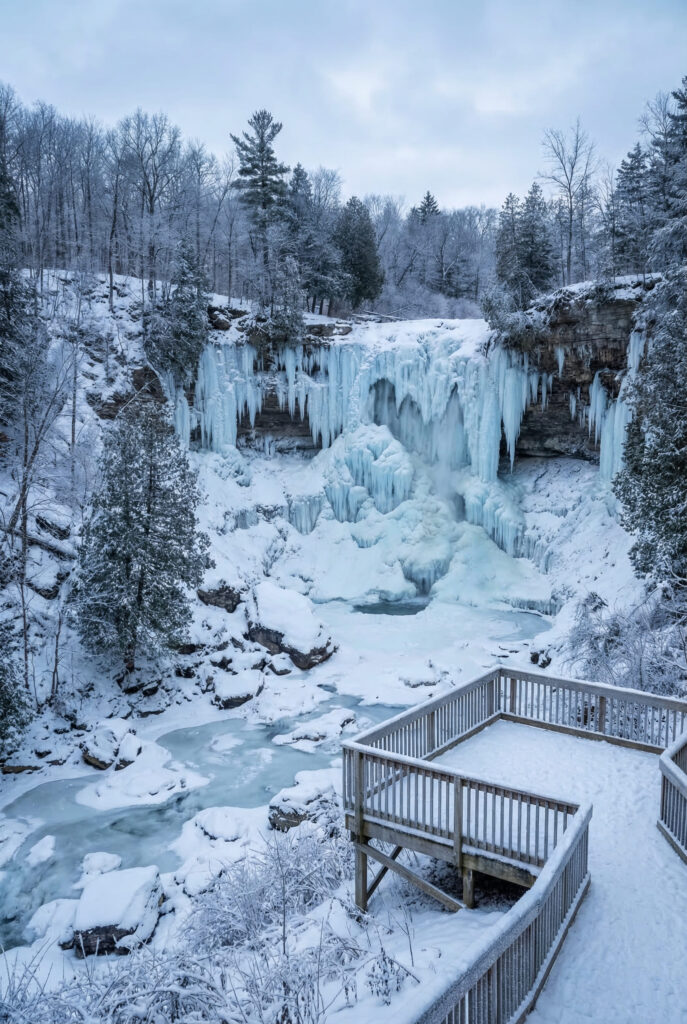
The waterfall flows throughout the year, but the volume changes a lot depending on rainfall.
In spring, snowmelt and seasonal rain give the falls a stronger flow.
In summer, the waterfall becomes thinner but the forest around it becomes lush and shaded.
In fall, the escarpment trees turn golden and the whole area feels more dramatic.
Even when the water flow is lighter, the cliffs and forest scenery still make the stop worthwhile.
Why some people call it the “elusive waterfall”
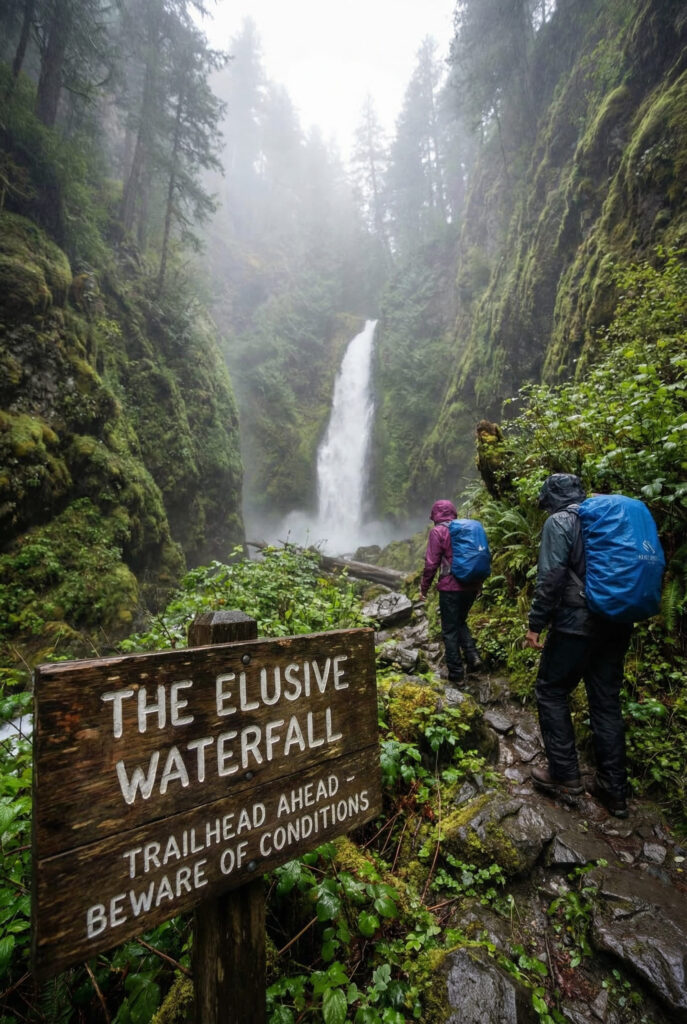
One thing visitors often mention after their first trip is that the waterfall can feel slightly hidden at first.
The trail leads to a viewing area fairly quickly, but the first overlook doesn’t always show the full waterfall clearly. If you continue along the trail a bit further, the angle opens up and the waterfall becomes easier to see.
This small detail is why some hikers describe Felker’s Falls as a bit “elusive.” People sometimes expect a single obvious viewpoint, but the best perspectives require walking a little further along the escarpment trail.
There’s also another small waterfall in the area known as Little Davis Falls, located downstream in the valley. It’s much harder to reach and isn’t part of the main conservation area route, so most visitors focus on the main Felker’s Falls viewpoint.
Turning the visit into a real hike
Felker’s Falls can be a quick stop or a longer hike, depending on how much time you have.
The short walk from the parking area to the waterfall viewpoint takes only a few minutes, which is why many visitors stop here while exploring Hamilton’s waterfall network.
But if you want something more adventurous, the trails connect to sections of the Bruce Trail, one of Ontario’s most famous hiking routes.
From Felker’s Falls, hikers often continue toward Devil’s Punchbowl, another escarpment landmark known for its huge bowl-shaped gorge and lookout. The route between the two areas can take a few hours depending on the path and pace.
This longer hike is more rugged than the short waterfall walk, but it gives a much better sense of the escarpment landscape.
What to know before visiting Felker’s Falls
Like many Hamilton waterfalls, Felker’s Falls changes depending on the season and weather.
The waterfall tends to look best after rainfall or during spring melt, when water levels are higher. During dry summer weeks the flow can be lighter, although the forest surroundings still make the visit pleasant.
Comfortable walking shoes are a good idea if you plan to explore the trails beyond the main viewpoint. The escarpment terrain can be rocky in places.
It’s also worth staying on the marked paths. The cliffs around the waterfall are steep, and unofficial viewpoints along the escarpment edge can be unstable.
For people planning a Hamilton waterfall day, Felker’s Falls is often combined with nearby stops like Devil’s Punchbowl, Albion Falls, or Webster’s Falls.
Why Felker’s Falls works so well as a Toronto day trip
Not every nature escape needs to be a full hiking expedition. Sometimes you just want fresh air, a scenic trail, and something that feels different from the city.
Felker’s Falls offers exactly that.
It’s close enough to Toronto for a relaxed day trip, the walk to the waterfall is short, and the surrounding escarpment landscape gives you a real sense of Ontario’s natural terrain.
Hamilton might be known as the City of Waterfalls, but Felker’s Falls remains one of the quieter ones — a place where you can still enjoy the view without feeling like you’re standing in line for it.