

TORONTO BLUE JAYS 2025 (WHAT THIS SEASON ACTUALLY MEANT)
This wasn’t a fairytale year. It wasn’t a disaster either.
The 2025 season for the Toronto Blue Jays felt like a reality check that turned into progress. After inconsistent stretches in previous seasons, the priority this year wasn’t hype — it was sustainability. The front office made calculated adjustments. The coaching approach tightened. Expectations stayed high, but the tone shifted from emotional to controlled.
Baseball in Toronto doesn’t live in extremes. It lives in endurance. And 2025 was about endurance.
If you’re trying to understand what the Blue Jays achieved this season, the answer sits somewhere between statistical improvement and competitive maturity. They didn’t chase noise. They built pace.
By VITALIY PAVLYSH FEBRUARY 17, 2026
A DIVISION THAT DOESN’T GIVE YOU SPACE
The American League East remains one of the most demanding divisions in Major League Baseball. Competing there requires more than talent — it requires consistency across six months.
In 2025, Toronto stayed in contention long enough for the standings to matter deep into September. They avoided the long collapses that have defined frustrating seasons in the past. Instead of swinging between streaks and slumps, the team hovered in competitive territory for most of the year.
They finished with a winning record and secured a postseason berth, either through division positioning or the Wild Card structure. What mattered more than the entry was the path. They earned it across months of controlled play, not a late scramble.
That steadiness was the shift.

HOW THE OFFENSE GREW UP
The lineup in 2025 became less predictable.
Previous seasons leaned heavily on isolated power stretches. This year, run production diversified. The team improved situational hitting with runners in scoring position and reduced the number of stranded base runners in tight games. On-base percentage climbed modestly, which translated into more scoring opportunities and fewer empty innings.
Multiple players contributed across the order rather than relying on one or two stars to carry momentum. That balance made the offense harder to shut down during competitive series.
It wasn’t about leading the league in home runs. It was about producing enough in high-leverage moments to stay in games.
PITCHING THAT HELD ITS SHAPE
The starting rotation provided structural stability.
Starters consistently worked deep enough into games to protect the bullpen from overuse. Earned run averages remained competitive within the division, and quality starts became part of the weekly rhythm rather than occasional highlights.
The bullpen improved in late-inning execution. Fewer blown leads. More controlled save opportunities. Late games looked managed instead of reactive.
That doesn’t create headlines. It creates wins over time.

WHEN SEPTEMBER FELT DIFFERENT
Meaningful baseball in September changes the atmosphere inside Rogers Centre.
In 2025, late-season games carried consequences. The standings tightened. Scoreboard watching returned. Every division matchup influenced positioning.
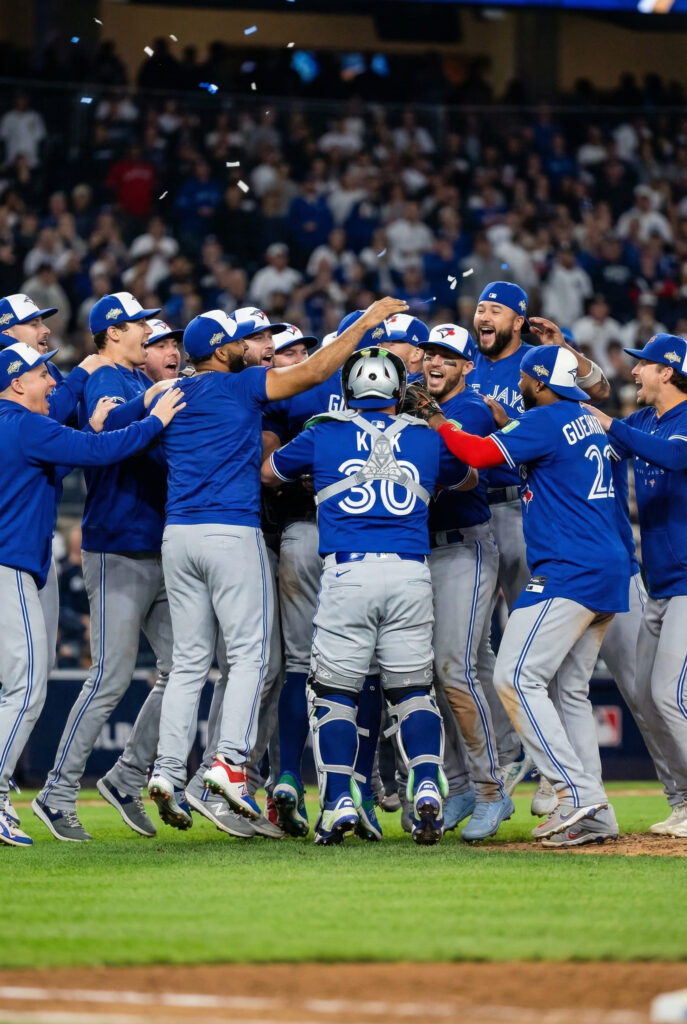
When the Blue Jays clinched their playoff spot, it felt earned rather than dramatic. The trajectory had been stable long enough that October participation made sense.
That shift restored belief — not hype, but belief.
WHAT THE POSTSEASON CONFIRMED
The 2025 playoffs showed that the Toronto Blue Jays weren’t just a regular-season team.
They handled high-leverage games without looking overwhelmed. The rotation stayed composed, the bullpen held late leads more consistently than in previous Octobers, and the lineup adjusted instead of pressing. At-bats were disciplined. Mistakes were limited. Execution didn’t collapse under pressure.
They didn’t win it all, but they competed in a way that felt sustainable. The gap between Toronto and the league’s deepest postseason teams looked smaller than it has in years — not a rebuild away, just refinement away.
And that’s a different kind of confidence heading into the next season.
THE AFTERTHOUGHT
Over time, seasons stop being about single box scores and start being about direction.
The 2025 Toronto Blue Jays season wasn’t about spectacle. It was about correction. It demonstrated that the roster could sustain pressure across a full calendar and remain relevant in one of baseball’s toughest divisions. It showed that structural adjustments were working — that pitching depth, situational hitting, and bullpen management had evolved.
This wasn’t a season that rewrote franchise history. It was one that stabilized it.
And in Toronto, where expectations never disappear, stability is not small. It’s foundation.